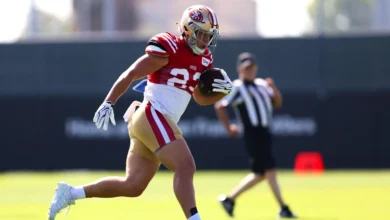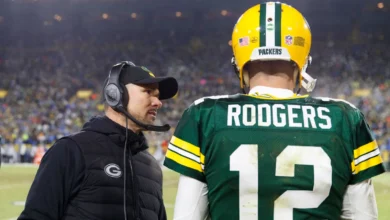
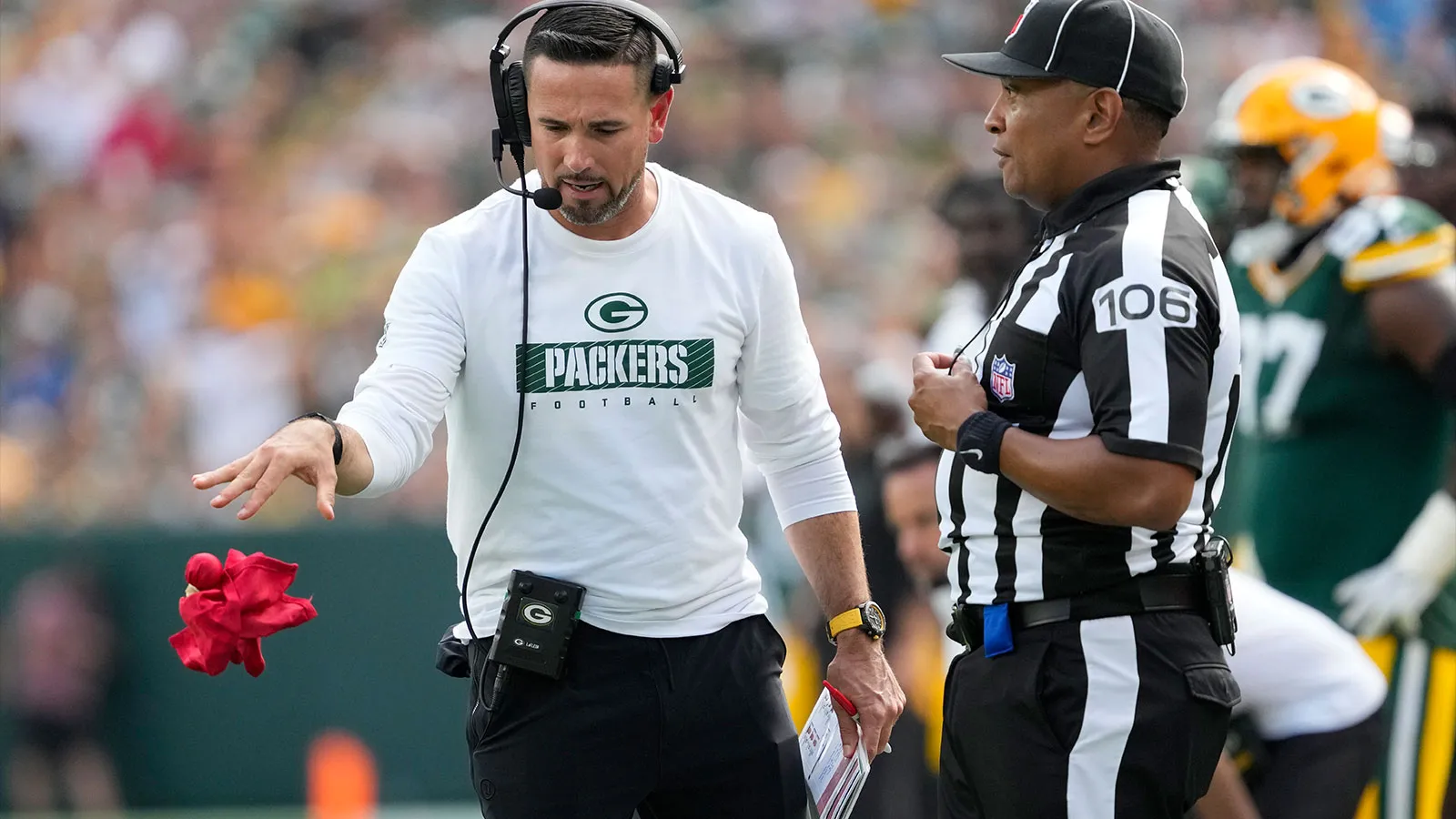
The NFL buried this one in a summer rulebook update instead of announcing it at the league meeting, which tells you something about how the league itself views it. Starting in 2026, ESPN’s Kevin Seifert reported Monday that head coaches will be allowed to hand off challenge-flag duty to a designated staffer, ending the 27-year run where only the man in the headset could throw the red flag.
The updated language in Rule 15, Section 1, Article 1(a) now reads: “The head coach or head coach’s pregame challenge designee can initiate a challenge by throwing a red flag onto the field of play before the next legal snap or kick.” A coach who wants to hand it off has to tell the officiating crew before kickoff, and per Field Level Media’s reporting, that designation locks in for the whole game — there’s no swapping duties at halftime if the plan isn’t working.
Why the NFL made this change
The timing lines up with a real problem. Seifert’s reporting notes there were 151 coaches’ challenges thrown in 2025, the most since 2019, and some coaches have admitted they’ve challenged calls out of frustration in the moment rather than any real belief the ruling would flip. A staffer removed from play-calling and clock management is, in theory, better positioned to make that call with a clear head. Seifert also points out the head coach is still going to be heavily looped in through the headset — this isn’t really coaches giving up control, it’s coaches building in a buffer before they act on impulse.
That’s a legitimate problem to solve. But it’s worth being honest about who this actually helps, because the data on coach challenge behavior doesn’t support the idea that most teams have a decision-making problem. They have an execution problem, and delegating who throws the flag doesn’t touch that.
The stat nobody’s connecting to this story
Look at how lopsided coach challenge success rates already are. Kyle Shanahan is 24-for-44 on challenges for a 54.5% success rate, and Sean McVay isn’t far behind at 47.5%, according to Fox Sports’ full-league breakdown. Mike McDaniel, during his four seasons running the Dolphins, finished at a brutal 21.1% — 4-for-19 — the worst mark of any coach with double-digit challenge attempts over that span. McDaniel is now the Chargers’ offensive coordinator, not a head coach, so his challenge button belongs to someone else in 2026. But his track record in Miami is the clearest illustration of what this rule is actually built for.
That’s not a small gap. That’s the difference between a coach whose staff has built a real internal process for evaluating replay angles fast, and a coach who’s basically guessing. Handing the flag to an assistant doesn’t close that gap by itself — it just changes who’s guessing, unless the front office actually assigns the job to someone good at it. Teams with functional processes, like San Francisco’s, aren’t going to see much change here. Teams with broken ones might not fix it just by moving the flag from one hand to another.
What actually determines whether this rule matters
This is the part getting lost in the coverage: the rule change is a delegation option, not a strategy mandate, and the league isn’t telling teams how to use it. If a front office treats this as an excuse to hand the job to whichever assistant happens to be standing closest to the sideline monitor, nothing improves. If a team builds an actual process — someone dedicated to watching the new boundary camera feeds that helped push league-wide challenge success rates up this past season, with a clear standard for what’s worth throwing the flag on — then this could genuinely move the needle for a team that’s historically been bad at this.
Jeff Hafley takes over in Miami this year with a rebuilt staff and no personal track record on NFL challenges yet, which makes the Dolphins as good a test case as any for whether this rule gets used the smart way or the lazy way.
What’s confirmed and what isn’t
The rule change itself is confirmed — it’s now written into the league rulebook, and multiple outlets have independently verified the language change. What’s not yet known is how many teams will actually use the option. No team has publicly named a challenge designee for 2026, and coaches won’t be required to disclose that decision until they inform officials before their season opener.
“Because staff members can communicate through headsets, the head coach is likely to be heavily involved in the decision to challenge, even if the mechanics looks different,” Seifert wrote — ESPN.
The 2026 season kicks off September 9 when the Patriots visit the defending champion Seahawks, so the first real test of who’s actually using this rule — and whether it changes anything — is still about a month out.