Seahawks OC Brian Fleury Getting the Full Mike Macdonald Treatment at Training Camp

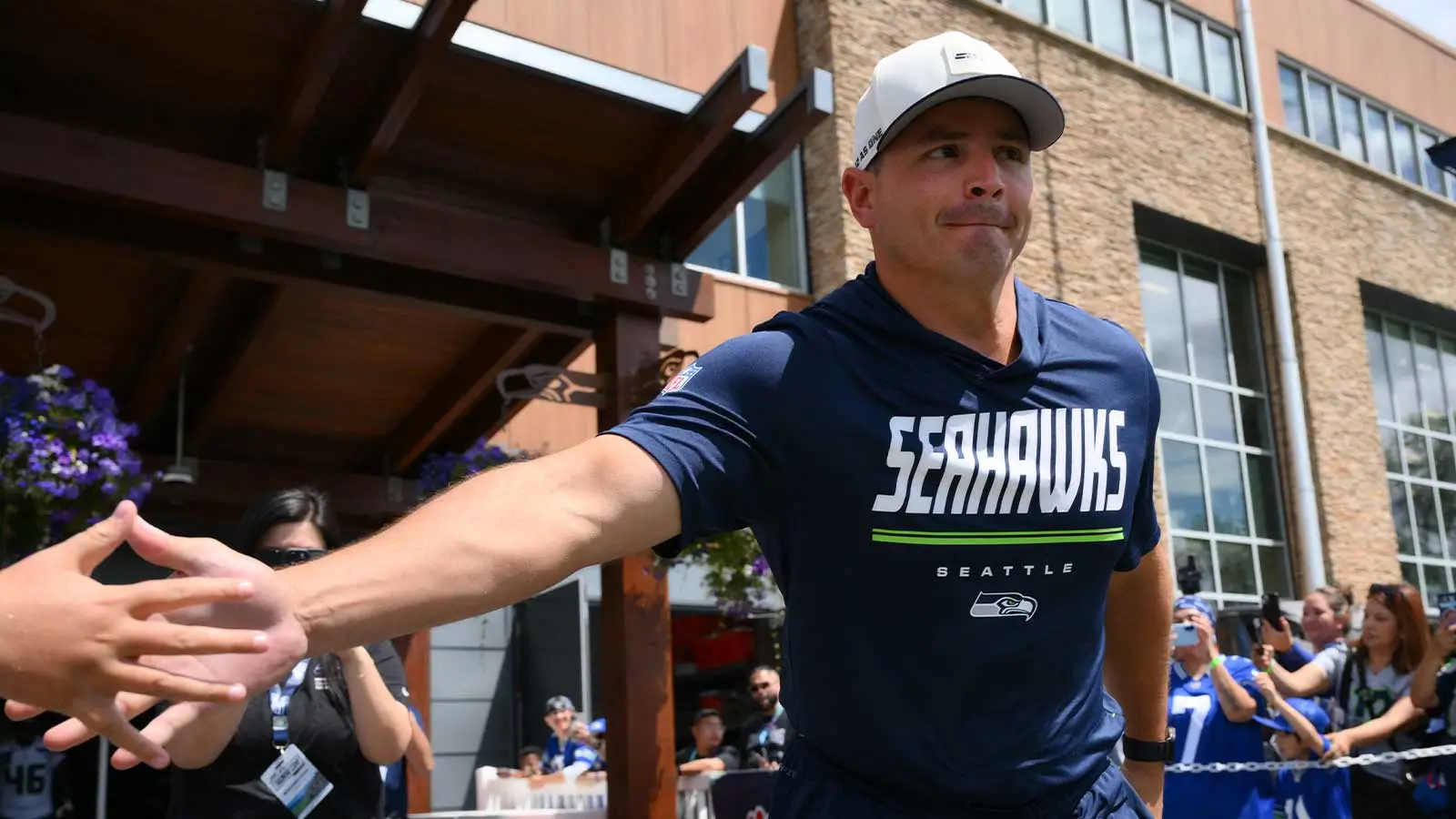
Brian Fleury doesn’t get a soft landing spot to learn his new job. Not with Mike Macdonald’s defense lining up across from him every day.
Seattle’s first-year offensive coordinator is getting the same treatment Seahawks opponents have dealt with for two seasons — shifting looks right before the snap, blitzes from angles nobody expected, and substitution packages designed to confuse. That’s the reigning Super Bowl champion defense, and it doesn’t ease up just because the guy calling plays against it works in the same building.
A First-Time Coordinator Building Something Familiar
Fleury spent seven seasons with the San Francisco 49ers, most recently as tight ends coach and run game coordinator. He’d never called plays at the NFL level before Seattle hired him in February to replace Klint Kubiak, who left to become the Las Vegas Raiders’ head coach two weeks after the Seahawks beat the Patriots in Super Bowl LX.
He’s not trying to blow the offense up. Seattle finished third in the league in scoring last season and doesn’t need a rebuild — it needs someone who can keep the engine running while tuning it. Fleury comes from the same Shanahan coaching tree as Kubiak, so the bones of the system carry over. The differences show up in the details.
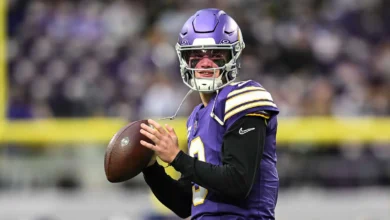
Quarterback Sam Darnold, who’s now working with his seventh offensive coordinator in seven NFL seasons, says it’s not the scheme that stands out about Fleury. It’s the standard he holds people to. “With Fleury, (it’s) his mentality,” Darnold said.
Two-Back Sets and More Work for Running Backs
Fleury wants fullbacks and two-back formations to become a real part of Seattle’s identity this season, not just a change-up look. The logic is simple: two backs in the backfield can shift the strength of a formation after the snap, which makes it harder for a defense to diagnose the play before it happens.
“I like using two backs because it can change the formation strength after the snap, as opposed to the whole defense being able to identify it before the snap. It creates some fit problems,” Fleury said. He added that it’s “becoming less and less common across the league, so it’s more difficult to prepare for.”
Seattle’s running backs have noticed the shift too. Multiple players say they’ve never worked from as deep a route tree as the one Fleury has installed for 2026, and the numbers back up why he wants it that way — San Francisco threw to running backs at more than twice the rate Seattle did last season.
Fleury is also leaning on quick pre-snap motion more than Kubiak did, and he wants tight ends working further down the field on Darnold’s throws rather than staying attached to the formation underneath.
Buy-In From the Locker Room
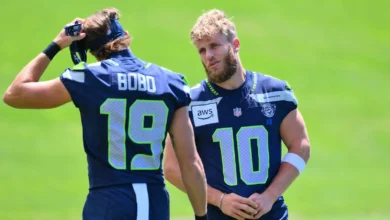
Wide receiver Jaxon Smith-Njigba, who led the NFL in receiving yards last season and is now on his fourth different offensive coordinator in four NFL years, has embraced the identity Fleury is pushing.
“We want to be good at the basics. We want to be good at the fundamentals. We want to be good after the catch,” Smith-Njigba said. “Smashmouth football — that’s how we love to play. The defense is going to have to react to us, and we’re just going to keep punching it down their throats.”
Left tackle Charles Cross has pointed to continuity as the offense’s biggest advantage heading into the transition — all five starting offensive linemen are back from the championship roster, giving Fleury a settled group to install his changes with rather than a unit learning each other from scratch.
| Category | Under Kubiak (2025) | Fleury’s Stated Direction (2026) |
|---|---|---|
| RB Target Rate | 16% of team pass attempts | Increased emphasis on backs in passing game |
| Two-Back Formations | Limited use | Wants it as a regular staple |
| Tight End Usage | Shorter, attached routes | Pushing tight ends further downfield |
The Real Test Hasn’t Started Yet
Macdonald has been direct about what training camp actually proves and what it doesn’t. Practicing against your own coordinator’s scheme every day sharpens things, but it’s not the same as game-planning for an opponent you’ve never seen live.
“We’ve done some simulations, but there’s nothing like until you get into the fight,” Macdonald said, describing weekly in-season game planning as the stage where Fleury and his staff will hit genuinely new territory.
Fleury said his first week running the show felt like a natural landing spot rather than a scramble. “Obviously, there’s a good foundation here in place,” he said. “A lot of good players. It’s an exciting situation to walk into. It’s awesome.”
Seattle opens its preseason slate soon, which will be the first real look at how much of Fleury’s game plan survives contact with an opponent that isn’t wearing the same uniform.