Bills’ New $2.2 Billion Highmark Stadium Draws Backlash Over Obstructed Seats

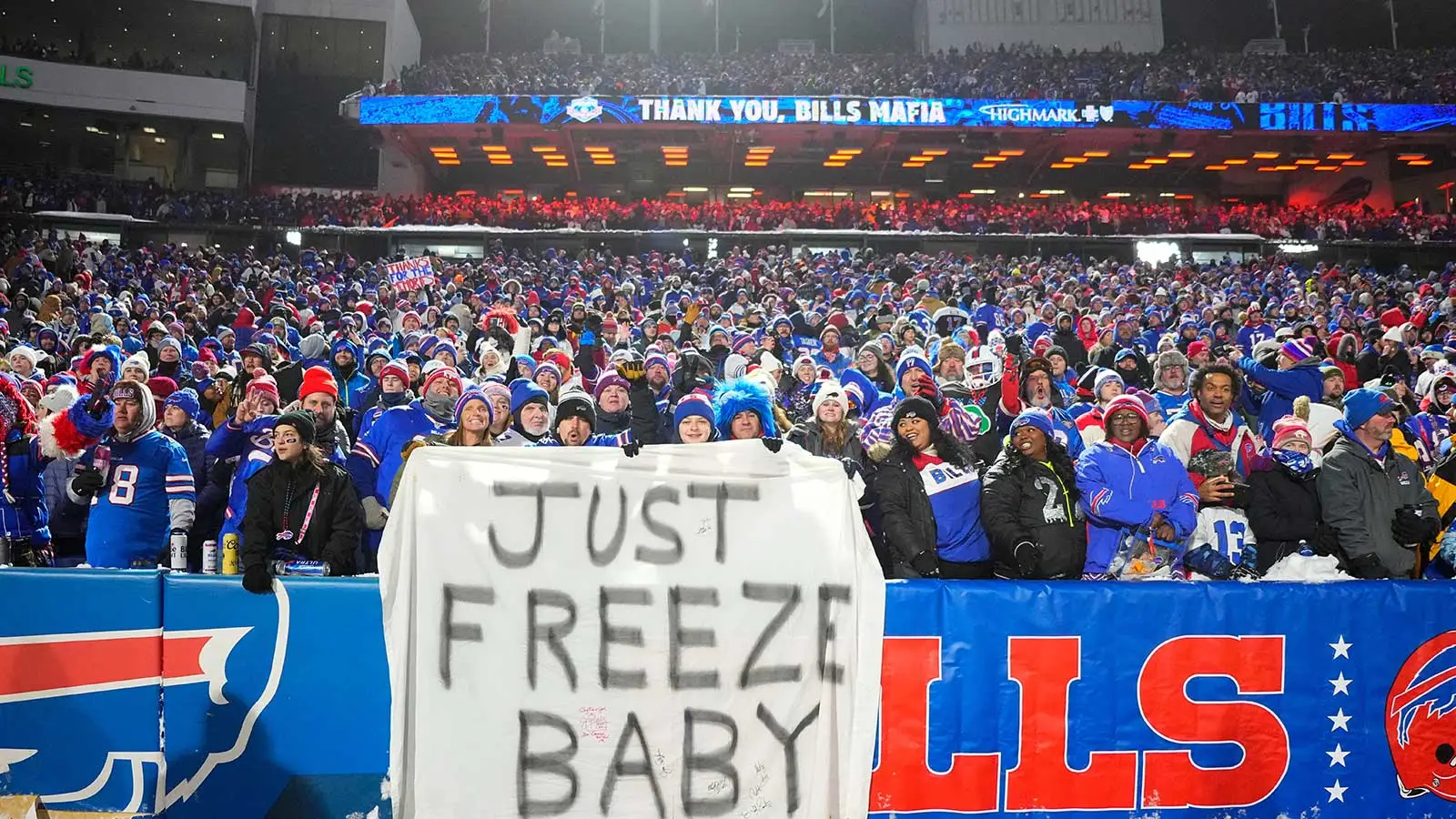
Buffalo Bills fans got their first live look at the team’s new $2.2 billion home this weekend, and not everyone liked what they saw. The Bills held their “Return of the Blue and Red” practice at new Highmark Stadium in Orchard Park on Saturday, opening the venue to the public for the first time. Within hours, photos and videos of seats with blocked sightlines were racking up millions of views, and the reaction split into two camps: awe at the building itself, and frustration over who’s going to be staring at a railing come September.
The players, for their part, came away impressed. According to ClutchPoints, the natural grass playing surface drew particular praise after decades on artificial turf at the old building. But a separate wave of posts told a different story from the stands, and one in particular went viral for showing an upper-deck seat with a badly blocked view of the field, kicking off a broader conversation about the building’s design.
What Fans Actually Found
This wasn’t one isolated complaint. Weather account BuffaloWeather posted a widely shared image of a seat with a significant chunk of the field cut off, writing: “Whoever designed the new Bills stadium wasn’t very keen to detail. Imagine paying tens of thousands on PSLs and season tickets and walk into a view like this”
Whoever designed the new Bills stadium should wasn't very keen to detail. Imagine paying tens of thousands on PSLs and season tickets and walk into a view like this… pic.twitter.com/mGhzbCaMVs
— BuffaloWeather (@weather_buffalo) August 9, 2026
Other posts spreading Saturday pointed to similar issues in different corners of the building. Reporting from The Mirror described plexiglass barriers, overhangs, railings and staircases cutting into sightlines across multiple sections, including some in the upper deck where large portions of the far-side end zone are blocked. A separate report from BroBible noted that some of the pricier lower-level seats, roughly 30 to 40 rows up near the 12- or 13-yard line, have their view of the opposite side of the field partially blocked by a standing platform. Fans also flagged a lack of escalators to the upper deck and no restrooms once you’re up there.
Not everyone is buying the outrage. Yahoo Sports pointed out that some obstruction in a modern stadium is close to unavoidable — staircases and vertical support have to go somewhere when a building is trying to pack in tens of thousands of seats. The counterargument from frustrated fans: for a stadium that cost more than any other in NFL history and came loaded with public money, “unavoidable” is a tough sell.
The MetLife Comparisons Started Fast
The most common reference point fans reached for wasn’t another new stadium — it was one that’s been open for 16 years. MetLife Stadium, home to the Giants and Jets since 2010, has long carried a reputation as one of the league’s least-loved buildings despite its size and amenities. Commentator Chris McNamee framed the comparison bluntly on X: “MetLife is the worst new stadium in the NFL. Buffalo: ‘Hold my beer.’ Yikes. I’m afraid to ask how much this guy paid for a PSL (personal seat license) if there was one”
MetLife is the worst new stadium in the NFL. … Buffalo: hold my beer. Yikes. I’m afraid to ask how much this guy paid for a PSL if there was one. (I assume there was. It’s the NFL.) https://t.co/NypBuDllCb
— Chris McNamee (@McNamee_HCMG) August 9, 2026
That take split the replies. User @Brundyy argued it wasn’t close, writing that the new stadium “clears MetLife by a million miles,” while @JackMac described getting “extreme MetLife vibes” from the videos circulating. On the other side, @nyytakes pushed back that “for all of MetLife’s issues, there isn’t really a bad seat in the house for a football game,” and @BakNTheNYGroove agreed that MetLife’s flaws don’t typically include obstructed views or drainage problems.
The comparison is worth putting in context. MetLife opened in 2010 at a construction cost of roughly $1.6 billion — built with no public funding — and seats 82,500, making it the largest venue in the NFL. It’s never been dinged for sightline problems; the complaints about MetLife have historically centered on its generic, corporate feel and its lack of a signature home-field atmosphere for either tenant, not whether fans can see the field.
What $2.2 Billion Bought — and Who Paid for It
New Highmark Stadium is the most expensive stadium ever built in the NFL, and the price tag has a long history of climbing. The project was originally pitched in 2022 as a $1.4 billion facility. By the time it reached substantial completion this June, the guaranteed maximum cost had settled at $2.2 billion, roughly $800 million over the original estimate. Public funding was locked at $850 million — $600 million from New York State and $250 million from Erie County — with Bills owners Terry and Kim Pegula covering every dollar of the overage above that threshold, according to reporting from construction industry outlet Westside Construction Group.
Fans have also been paying into the building directly. Personal seat licenses, the up-front fees required to buy season tickets in many sections, have generated more than $263 million toward the project, separate from regular ticket revenue. That’s the financial backdrop that’s fueling a lot of the frustration this weekend: fans who put down PSL money years before the building opened are now getting their first real look at what they bought, and some don’t like the angle.
The stadium seats around 62,000 to 66,000 depending on configuration, smaller than MetLife’s 82,500, reflecting a broader league trend toward more compact, premium-heavy venues. It’s deliberately open-air rather than domed — the Bills wanted to preserve the outdoor, cold-weather identity of Buffalo football — but a canopy overhang covers roughly 64 to 65 percent of seats, the concourses are heated, and the field carries a snow-melt system for winter games.
What’s Next
The obstructed-view complaints are going to get their first real stress test soon. The Bills host the Carolina Panthers in their preseason opener on Saturday, Aug. 15, the first time the new building will be used for an actual football game rather than a practice session. The regular-season opener follows on Sept. 17 against the Detroit Lions, with early ticket listings for that game reportedly starting north of $600 a seat.
Whether the sightline issues get addressed before then is unclear — nothing from the Bills organization or Erie County has been announced publicly about remedying specific sections. Given how much of the criticism has centered on a handful of identifiable seating areas rather than the building as a whole, it’s plausible the team could offer relocations or partial refunds to affected ticket holders, but that’s speculation at this point, not anything confirmed. What is certain is that Saturday’s scrimmage was the first time thousands of paying fans sat in these seats, and it won’t be the last chance for the story to develop before kickoff.