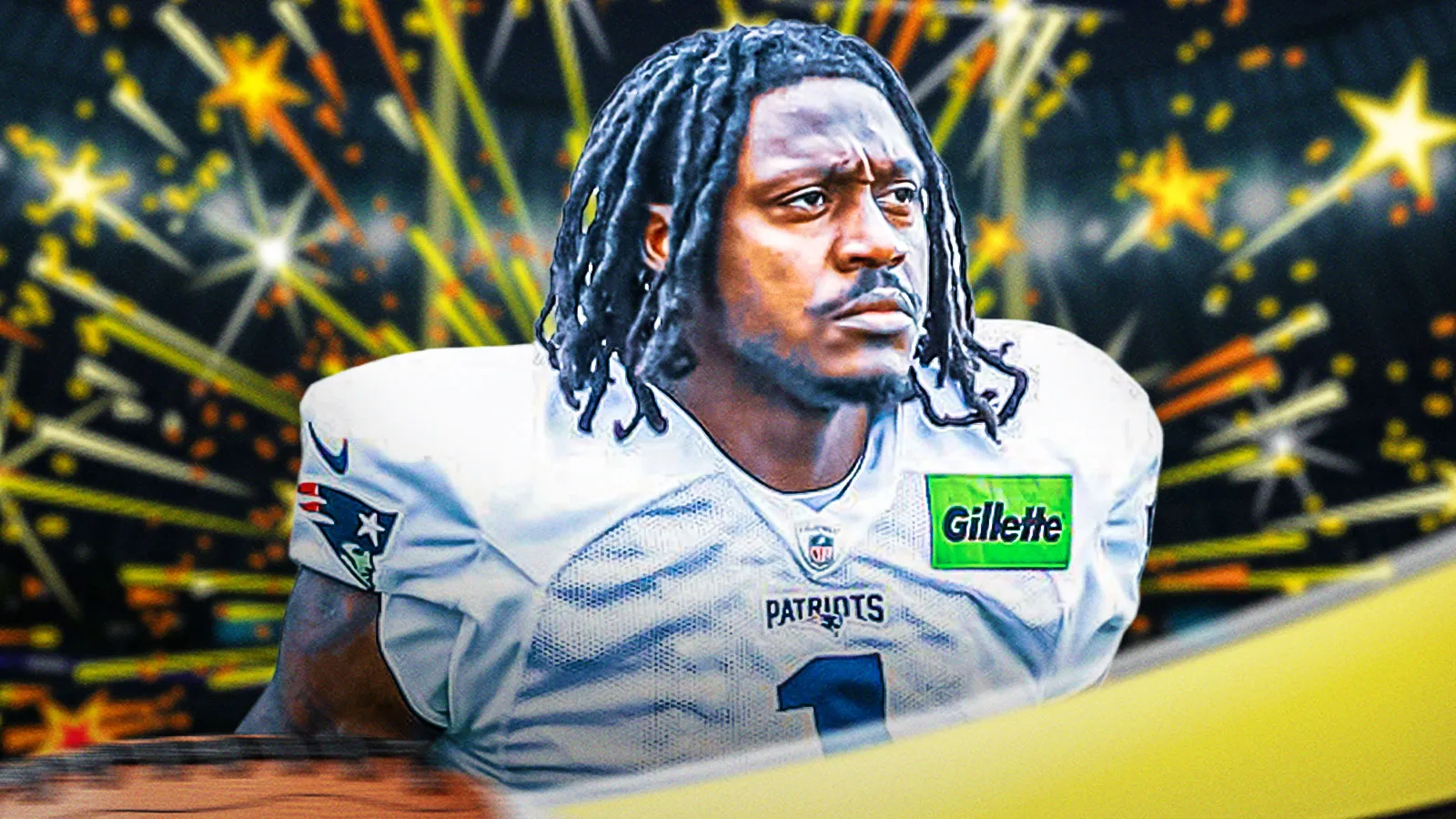
A Trade New England Waited All Offseason For
The Patriots sent Philadelphia a 2028 first-round pick and a 2027 fifth-rounder for Brown on June 1, according to the team’s official announcement. The Eagles waited until after June 1 specifically to split Brown’s dead-cap hit across two seasons instead of absorbing it all in 2026 — a cap mechanism worth understanding, because it tells you Philadelphia wasn’t rushed into this. They picked their price and got it.
Brown, who turns 29 this year, arrives with six 1,000-yard seasons in seven NFL years and three Pro Bowl nods. But 2025 was his quietest full season in Philadelphia: 78 catches, 1,003 yards, seven touchdowns, and a career-low 12.9 yards per catch, a dip that NFL.com tied to the Eagles’ run-heavy identity and reported friction that spilled into Brown’s social media posts.
The Real Camp Story: A Rocky Start That Turned
Here’s what most fantasy previews are skipping past. Brown and Maye did not click immediately. Through the Patriots’ first four practices, SI reported the pair connected on just one of seven targets in team drills, including the tipped-pass interception. That’s a real, unglamorous data point — and it matters more than the highlight reel, because it shows a receiver and quarterback still speaking different dialects of the same offense in June.
Then New England put on full pads. PatsFans.com documented back-to-back strong practices that included the touchdown over Gonzalez, and NBC Sports Boston tracked Maye going 4-of-5 targeting Brown with a touchdown in an 11-on-11 session. Brown himself framed the process bluntly: “You have to do what your quarterback likes,” he told reporters after a Foxboro practice.
This is the part a rewrite of the trade reaction piece misses: chemistry in a new offense isn’t a light switch. It’s built through padded reps where a receiver learns the exact width of a quarterback’s back-shoulder throw, and a slow start followed by a live touchdown against a top-flight corner is a far more convincing signal than “they’ve looked good in camp.”
Why the Target Share Argument Still Holds
Brown spent four years sharing a Philadelphia passing game with A.J. Brown-caliber weapons around him and a run-first offensive identity. New England’s offense was actually more run-heavy last season — 23rd in pass plays per game, per Last Word on Sports — but Brown now walks into a receiver room without a true established alpha, since the team released Stefon Diggs in free agency. That’s the opportunity math fantasy drafters care about: fewer proven mouths to feed, one clear No. 1.
Maye isn’t a small factor here either. He finished 2025 as fantasy’s QB2, throwing for 4,394 yards and 31 touchdowns on a league-high 72% completion rate, per Pro Football Reference. He was one first-place MVP vote from beating Matthew Stafford outright. A quarterback with that kind of accuracy and a scrambler’s instinct to extend plays is exactly the profile that turns a physical, contested-catch receiver like Brown into a touchdown machine near the goal line — Maye simply has to give Brown a catchable ball in traffic, and Brown does the rest.
My Read
The slow start doesn’t worry me. If anything, it’s the more believable version of how this partnership was always going to develop — quietly rough in shorts, then live once real contact starts. Where I’d push back on the breathless fantasy premium some outlets are already putting on Brown: New England was a run-first team with Maye scrambling 62 times last season, and that identity doesn’t flip overnight just because a WR1 arrived in June. I’d bet Brown finishes as a strong WR1 in points per game rather than in raw volume — closer to a 130-target, 85-catch season than a target hog pushing 150-plus.
What to Watch Next
Preseason usage is the next real marker. If Brown is running full route trees with the first-team offense into August and Maye keeps targeting him in contested situations rather than easy checkdowns, the fantasy community’s optimism holds up. If the target share instead spreads evenly across Brown, Romeo Doubs, and Hunter Henry once the games count, Brown’s ceiling shrinks from must-start WR1 to high-end WR2 with spike weeks.
Read More: