Training camps are opening across the league, which means fantasy football drafters have maybe three or four weeks left to do their homework before real drafts start. My colleague Dan Parr laid out his tiered running back rankings for the 2026 season, and stacking those tiers against actual draft position is one of the best ways to find value. Where is the market wrong?
Below are seven running backs whose fantasy ADP — draft position data via ESPN — sits meaningfully below where their talent, role, or offensive situation says they should go. This list runs top to bottom, from a Round 2 pick who could be a true RB1 to a Round 13 dart throw.
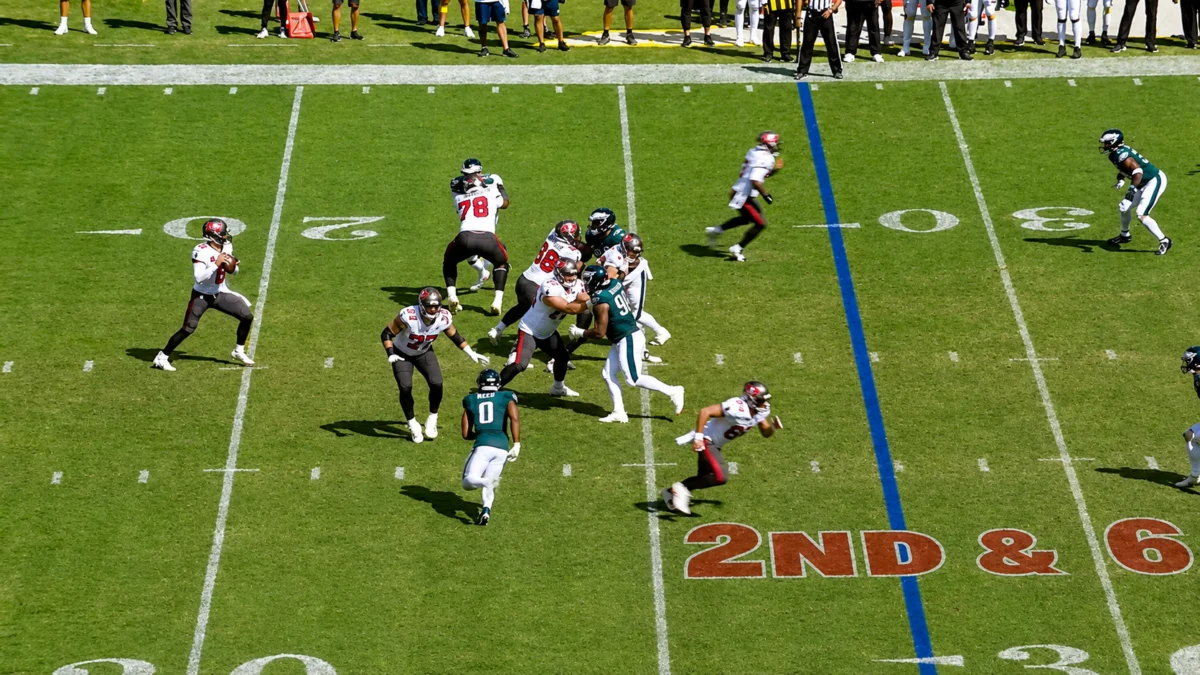
7. Bucky Irving, Tampa Bay Buccaneers (ADP: Round 5)
Irving was the RB18 in fantasy points per game last season at 13.9, but he missed seven games in the middle of the year with ankle and shoulder injuries. Those absences likely fed into a broader efficiency collapse — his yards per carry dropped from a healthy 5.4 as a rookie to just 3.4 in Year 2. He finished the year on a six-game stretch after returning in Week 13, then had shoulder surgery this offseason.
That surgery created real uncertainty about his availability, and it lingered for months. Buccaneers head coach Todd Bowles said in May that Irving might not be back until “summer or fall.” But the picture has brightened considerably in the past week. Irving told Fox 13’s Mark Skol at his youth football camp that he expects to be full-go when camp opens July 29. Skol posted on X: “Bucs running back Bucky Irving hosted his annual youth football camp over at Blake High School this morning. He tells me he will be good to go for training camp!” That’s Irving’s own account of his health, not a team confirmation, so it’s worth treating as optimistic-but-unofficial until he actually takes the field.
Pass-catching backup Rachaad White left for Washington in free agency and was replaced by Kenny Gainwell, while the Buccaneers also hired offensive coordinator Zac Robinson, who worked with Bijan Robinson in Atlanta the past two years and should open up Tampa Bay’s ground game. Irving probably isn’t a lock for true RB1 territory with Gainwell and Sean Tucker still around to siphon touches, but he’s a strong bet to bounce back efficiency-wise and outperform his current RB20 ADP — assuming the shoulder holds up through camp.
6. Kyren Williams, Los Angeles Rams (ADP: Round 4)
The only real explanation for Williams going as low as RB17 is fear that Blake Corum eats into his workload. Over the past three seasons, Williams has finished as the RB7, RB7 and RB9 in fantasy — one of just four backs to finish top 10 in all three years, joining Bijan Robinson, Jahmyr Gibbs and Derrick Henry. He’s scored 44 touchdowns in that span while averaging just over 20 touches a game.
Yes, Corum’s usage spiked from Week 7 on last season — 11 touches a game with five total touchdowns — while Williams’ scoring dipped to 14.7 points per game in that stretch. But that still would have ranked as RB11 production over that window, and he’s being drafted six spots behind that mark for 2026. The Rams signed Williams to a three-year, $33 million extension last August, and there’s little reason to expect an even backfield split forming anytime soon. He may not return to the RB7-to-RB9 range with Corum’s role growing, but he’s still the lead back in one of the league’s better offenses — a distinction few other running backs can claim past the third round.
5. Javonte Williams, Dallas Cowboys (ADP: Round 4)
Williams had a genuine breakout in his first year with Dallas, piling up 1,338 yards from scrimmage and 13 total touchdowns — both career highs. Despite a real dip in his receiving numbers and a missed game in Week 18, he finished as the RB12 in PPR scoring after being drafted as the RB36. Little has changed in the Cowboys’ offense this offseason, and the defense looks improved on paper, which could produce more favorable game scripts for Dallas’ run game.
And yet Williams has slid into the fourth round in current ADP, sitting at RB16 — behind Kenneth Walker III and Breece Hall. That price looks like lingering skepticism from his injury-plagued four years in Denver more than anything from last season. Williams enters 2026 without real competition for touches in a productive offense. His floor looks like RB16, with legitimate top-10 upside if he gets a few more targets and better touchdown luck.
4. Jonathon Brooks, Carolina Panthers (ADP: Round 11)
Brooks was drafted more than two years ago and has played in just three NFL games, totaling 12 career touches — the rest of the time spent recovering from multiple ACL tears in the same knee. Fantasy drafters have understandably stayed away, with his ADP sitting around RB39. The risk is real, and even a healthy Brooks would have to contend with Chuba Hubbard in a run game that struggled for stretches last season.
But the upside argument holds up. Carolina drafted Brooks 46th overall in 2024, and history says top-50 running backs post at least one RB2-caliber season more often than not. He drew Jamaal Charles comparisons during the pre-draft process and was considered by many to be the top back in his class. Hubbard played behind Rico Dowdle for most of last season, and Brooks arguably has a stronger claim to the lead role now than Dowdle did before he left in free agency. The uncertainty around Brooks’ health and role is real, but it’s already baked into his 23-year-old’s rock-bottom draft cost.
3. Chase Brown, Cincinnati Bengals (ADP: Round 3)
Brown has quietly been one of the more consistent fantasy backs in the league the past two seasons despite some erratic circumstances around him. He totaled 283 touches, 1,350 yards and 11 touchdowns in 2024 without opening the year as the starter, then followed that with 301 touches, 1,456 yards and another 11 touchdowns in 2025 — largely through poor quarterback play during Joe Burrow’s injury absence. Strip out backup Jake Browning’s three rough starts last fall, and Brown’s season average works out to 18.2 fantasy points per game, which would have ranked as RB6.
He has essentially no competition for touches — backup Samaje Perine might see six or seven touches a game — and he’s entering a contract year with a shot at top-10 running back money if he produces again. Burrow is healthy and has called this Bengals roster the most talented he’s played with in Cincinnati. Even with all of that, Brown is going in the third round as the RB13. Barring an injury to himself or Burrow, it’s hard to see him finishing outside the top 10 — and he has legitimate top-six upside, especially in PPR formats, if Cincinnati’s offense returns to its previous highs.
2. Jordan Mason, Minnesota Vikings (ADP: Round 13)
Filling in for an injured Christian McCaffrey, Mason opened the 2024 season hot for San Francisco before landing on injured reserve with a high ankle sprain. A trade to Minnesota — into a backfield led by an aging Aaron Jones — made him a popular sleeper for 2025. Jones missed five games and posted a career-low 4.7 yards per touch last season, signaling decline, but Mason still only compiled 173 touches and finished as the RB36 overall — not the breakout many fantasy managers expected.
The case isn’t dead, though. Jones turns 32 in December and has already crossed the 1,500-carry threshold that tends to mark the cliff for a running back’s career. It wouldn’t be a surprise to see Mason take over lead duties early in the season, pushing Jones into more of a third-down role. Minnesota’s offense also projects to improve after ranking 26th in points and 28th in yards last year behind shaky quarterback play from J.J. McCarthy, Carson Wentz and Max Brosmer. Whoever wins the starting job in 2026 should represent an upgrade for coordinator Kevin O’Connell’s offense. At Round 13 price, Mason is close to risk-free — with a real chance to return sneaky RB2 value.
1. Omarion Hampton, Los Angeles Chargers (ADP: Late Round 2)
Hampton’s rookie season was interrupted by an eight-week absence for a fractured ankle, and the Chargers’ banged-up offensive line made it tough to fully evaluate his debut. But the healthy-game numbers stand out. Hampton saw 15-plus touches in eight of his nine appearances, including his first NFL game. In those eight games he totaled 521 rushing yards and four touchdowns, adding 31 catches for 191 yards and a receiving score — an average of 16.5 fantasy points per game that would have ranked as RB8. Per Next Gen Stats, he also forced a missed tackle on 29.8 percent of his carries, fourth-highest among qualified backs.
| Category | Hampton (8 healthy games, 2025) | Pace equivalent (RB rank) |
|---|---|---|
| Fantasy points per game | 16.5 | RB8 |
| Missed tackles forced (rate) | 29.8% | 4th among qualified RBs |
| Rushing yards + TDs | 521 yds, 4 TD | — |
| Receiving yards + TD | 191 yds, 1 TD (31 catches) | — |
This offseason, the Chargers rebuilt the interior of their offensive line, got Pro Bowl tackles Joe Alt and Rashawn Slater back healthy, and hired Mike McDaniel to replace Greg Roman as offensive coordinator. Over four years in Miami, McDaniel’s offenses ranked fourth in the NFL in explosive carry rate (runs of 10-plus yards) and sixth in yards per carry. His Dolphins also leaned on outside-zone runs — the exact scheme where Hampton ranked third in EPA per carry and fourth in success rate among qualified backs last year, per NGS — at the second-highest rate in the league, 60.7 percent of runs. Hampton himself sounds bought in on the fit: speaking to reporters in June, he said of the new offense, “It gets me pumped and ready for the season because I know how special that offense is. We truly could do big things,” according to the Chargers’ team site.
Put the pieces together — role, scheme fit, a rebuilt line — and the current RB11 ADP has a real chance to look like a bargain by midseason, potentially joining the sport’s upper tier of backs alongside players like Jonathan Taylor and De’Von Achane.