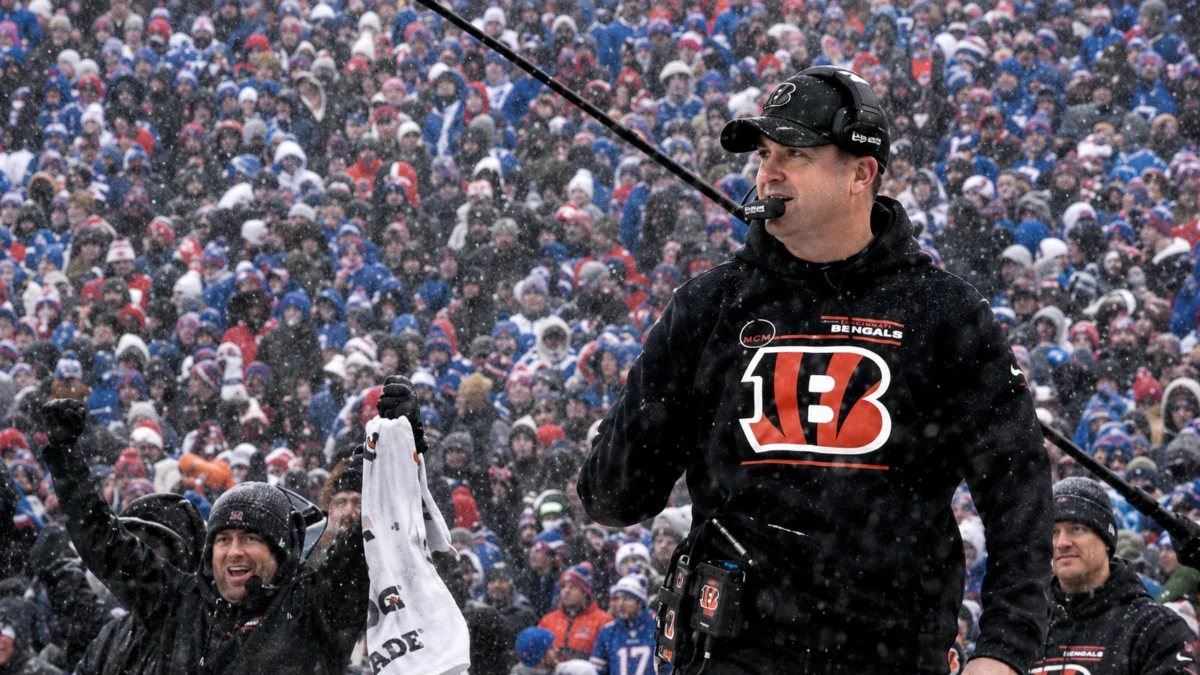
Orlando Brown Jr. isn’t hedging. Cincinnati’s left tackle says his offensive line is the best pass-protection unit in football, full stop, and he’s not interested in qualifying the statement.
Brown made the claim during a recent appearance on the “Locked on Bengals” podcast with hosts Joe Goodberry and Jake Liscow.
“I really think, and I say this confidently, I really feel like we got the best pass protection unit in the NFL,” Brown said. “There isn’t a lot of groups that could come do what we do on a week-to-week basis and have the success that we’ve had, especially with the circumstances. As you guys know, pass protection is the hardest thing to do in the sport in my opinion. Probably outside of a few other things like playing quarterback and man-to-man coverage at corner. … Our unit is so strong in pass protection.”
That’s a bold thing to say about a line that finished 28th in pass block win rate last season, according to NBC Sports. But Brown isn’t just talking. He’s making a bet on continuity, and on what this group looked like once the dust settled from a season that threw everything at it.
Why the Numbers and the Confidence Don’t Match — Yet
Start with the ugly part. Cincinnati’s offensive line played all of 2025 without a settled quarterback situation. Burrow went down with a toe injury, Jake Browning started three games in relief, and the team eventually turned to Joe Flacco before Burrow returned. Every shuffle at quarterback meant a new rhythm for the five guys up front to relearn.
Under those conditions, the pressure numbers were rough. The Bengals ranked 28th in pass block win rate at 58%, and no individual lineman cracked the top 20 at his position in PFF’s win-rate rankings, according to Roundtable.io’s analysis of the unit.
But that’s only half the picture. Zoom out to actual sacks allowed, and the story flips. Cincinnati gave up 36 sacks all season, tied for 14th-fewest in the league, with a 5.3% sack rate — the team’s best finish in that category since 2014, according to the Bengals’ own official position preview. Pressure and sacks aren’t the same thing. A line can bend under pressure counts and still keep the quarterback standing, and that’s roughly what happened here.
Individually, the numbers back up more of Brown’s swagger than the team-wide ranking suggests. Per Pro Football Focus grading cited by Roundtable, all five Bengals offensive linemen posted pass-block grades above 60 last season. Guard Dalton Risner and center Ted Karras each graded above 70, and the two combined to allow just three sacks between them.
The Same Five Guys, One More Year Together
The headline fact for Cincinnati’s offense this summer isn’t a new addition. It’s continuity. Assuming no injuries in camp, the Bengals will start the same five offensive linemen in a season opener that they did in the previous year’s finale — something that hasn’t happened in Cincinnati since 2010, according to SI.com’s Bengals coverage.
That group is Brown at left tackle, Dylan Fairchild at left guard, Karras at center, Risner at right guard and Amarius Mims at right tackle. Fairchild, a third-round rookie a year ago, started 15 games and posted the fourth-highest PFF offensive grade among all rookie offensive linemen with at least 100 snaps — plus the second-highest pass-block grade in that group, per the Bengals’ team site. Risner signed with Cincinnati just before the 2025 season opened and took over the starting job in Week 2, finishing with a 72.3 PFF grade that ranked 24th among guards.
Mims, meanwhile, kept developing in his second year. He played all 17 games and logged the 11th-most pass-blocking snaps among tackles league-wide, allowing pressure on just 5.3% of those snaps — the 27th-lowest rate among tackles with at least 100 pass-block snaps, per PFF data referenced by the team.
The unit didn’t stand pat this offseason, either. Cincinnati added two more offensive linemen in the draft — Auburn center Connor Lew in the fourth round and Duke tackle Brian Parker II in the fifth — to build depth behind the starting five.
2025 Bengals Offensive Line — Key Numbers
| Metric | 2025 Result | League Rank |
|---|---|---|
| Pass block win rate | 58% | 28th |
| Sacks allowed | 36 | Tied-14th fewest |
| Sack rate | 5.3% | 9th |
| Risner PFF grade | 72.3 | 24th among guards |
| Mims pressure rate allowed | 5.3% | 27th-lowest among tackles |
What It Means Going Forward
Brown’s comments are opinion, not a stat line, and he knows it. He’s played on strong offensive lines before — a Super Bowl-winning stint with Kansas City and time in Baltimore — so he has a frame of reference beyond Cincinnati. Whether that frame of reference makes him right about 2026 is something training camp and the regular season will actually test, not something a podcast appearance settles.
What’s not in dispute is the continuity angle. A line that stays together tends to communicate better, and Cincinnati is banking on exactly that after three years of Burrow absorbing hits behind a rotating cast. If the line’s second-half improvement from a year ago — the version built around a settled starting five rather than an in-season quarterback carousel — carries into a full season, Brown’s confidence starts to look less like bulletin-board material and more like a reasonable read on where this group is headed.
Cincinnati opens training camp July 28.