I’ve Been Scouting the NFL Draft Since 2012. Here Are the Misses That Taught Me the Most

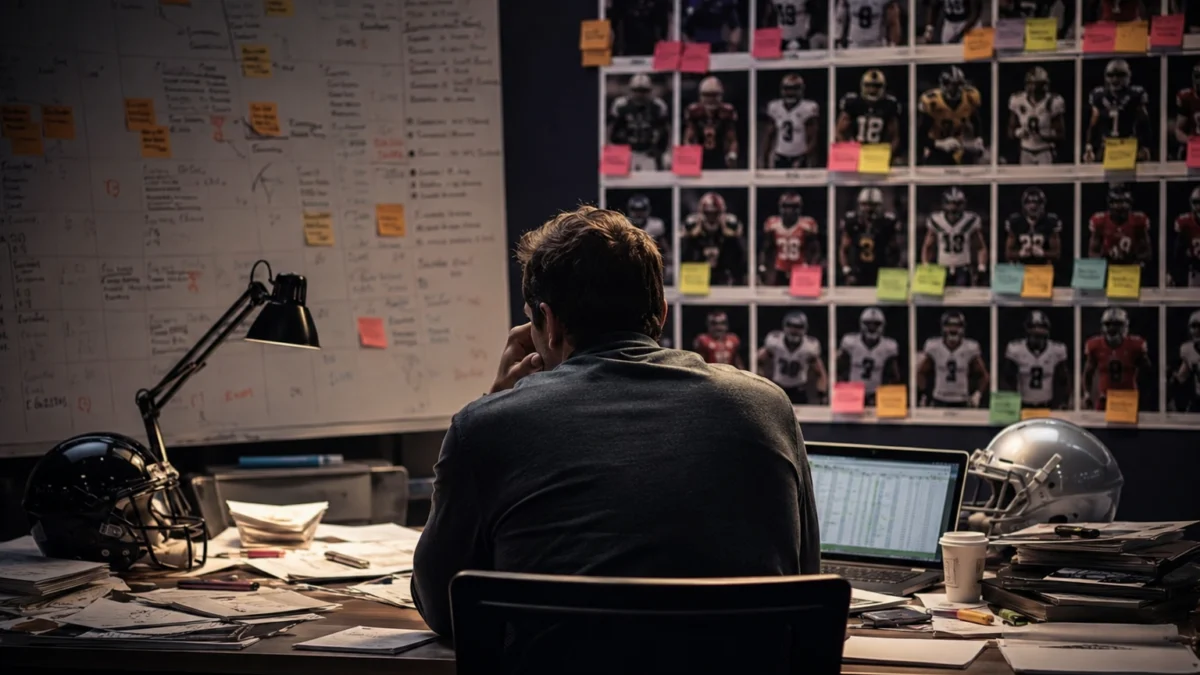
Evaluating NFL Draft prospects is a constant exercise in humility. The best scouts hold onto their hits, but they study their misses harder. Every blown evaluation is a chance to sharpen the process, and no one who does this work seriously is ever really finished learning it.
Football won’t let you finish. The sport moves, and scouting has to move with it.
Over more than a decade of evaluating draft classes — starting with 2012, back when this was still an amateur pursuit — mistakes have piled up at nearly every position. Wide receiver. Quarterback. Edge rusher. Safety. Each one left a different scar, and a different lesson. Here’s a walk through the five that mattered most, and what they changed about how I watch tape now.
The Wide Receiver Misses: Jerry Jeudy and Justin Blackmon
Two receiver misses sit on opposite ends of the evaluation spectrum, and together they tell the whole story of what can go wrong.
Jerry Jeudy came out of Alabama in the 2020 draft looking like a route-running savant. Sleek, explosive, the ultimate separator. It was easy to fall for.
What got undervalued was Jeudy’s ability to play through contact and win in tight quarters. NFL coverage doesn’t stay loose. Defensive backs get bigger, faster, stronger at the next level, and receivers — slot or outside — have to win physical battles, not just gain a step. Jeudy hasn’t done that consistently. He’s put together one 1,000-yard season, with the Cleveland Browns, largely because he was the clear top option in that room. Outside of that, the production hasn’t matched the traits.
That miss reshaped how much weight contested-catch ability and physicality at the catch point now carry in an evaluation — far more than they did early on.
Justin Blackmon was the opposite problem, and it happened almost a decade earlier, in the 2012 draft. The Oklahoma State receiver was physical, dangerous after the catch, comfortable winning contested balls. On tape, there wasn’t much to dislike. Off the field was a different story — personal struggles and, it turned out, a lack of real love for the game itself.
That’s the hardest gap to close in outside scouting. Talking to sources around the league, reaching out to people at the school, sitting down with the player — all of it helps build a picture of who someone is and what drives them. But that information isn’t always available, and sometimes what you do get isn’t the full story.
Blackmon is the reminder that talent alone doesn’t survive the jump to the NFL. You have to actually want the work.
The Edge Rusher Miss: Derek Barnett
Derek Barnett left Tennessee as one of the more productive pass rushers in the 2017 class — great hands, a real plan on every rush, sharp counters. Technically, he had it all, and it was easy to get excited about a player who looked that polished.
That evaluation became an early lesson about how much raw athleticism matters at edge rusher specifically. Most positions allow you to discount testing numbers to some degree. Edge isn’t one of them. Outside of a rare outlier, becoming a high-volume, difference-making sack producer at the NFL level requires being a genuine athletic freak — the kind of first step and cornering ability that shows up in names like Myles Garrett, Will Anderson, and Danielle Hunter, players who dominate not because of technique alone but because their traits create disruption technique can’t replicate.
Barnett went in the top 15 to the Philadelphia Eagles, and at the time, that felt like a strong pick. He turned into a solid NFL player. He never became the difference-maker the tape suggested, because the polish wasn’t backed by the physical dynamite that position demands.
The Quarterback Unicorn: Josh Allen
The single biggest miss of this whole run might be Josh Allen, out of Wyoming in 2018. A 6-foot-5, 240-pound quarterback with a rocket arm and legitimate athleticism — the physical upside was obvious. So was the accuracy problem. Allen was as inaccurate as any quarterback prospect evaluated in this stretch.
Accuracy usually doesn’t transform. It can tick up incrementally with better footwork and coaching, but the gap between the quarterback Allen was at Wyoming and the one he became in Buffalo shouldn’t have been possible to predict.
Allen is an outlier who landed in the right situation — a strong private quarterback coach in Jordan Palmer, and real infrastructure in Buffalo built to develop him. Drop him into a franchise without that same stability, and there’s a real chance this becomes a very different story.
That’s the lesson: developmental situation matters more than it gets credit for, especially for young quarterbacks. The caveat is just as important, though. Lean too hard into “the situation will fix it” and it turns into the trap that inflates evaluations of players like Anthony Richardson. Allen isn’t proof that the model works. He’s proof that the model has exceptions — and that even a prospect who looks doomed on tape can still become a superstar in the right hands.
The Safety Lesson: Calen Bullock
Calen Bullock, the USC safety Houston drafted in 2024, was not a player who graded out well here. Elite ball skills, real range, a long frame — but a player who was allergic to tackling at USC, and still isn’t a strong tackler now.
What that evaluation revealed is how much scheme and coaching context deserve to factor into a grade. Houston uses Bullock as a true middle-of-the-field safety, working from depth, kept largely out of box run support. That fit neutralizes the exact weakness that stood out on college tape. For a free safety with elite range who isn’t asked to be a primary tackler, the right defensive structure can make the profile work anyway.
It’s a reminder that scheme fit isn’t a footnote. Sometimes it’s the difference between a flaw that sinks a grade and a flaw that never gets exposed.
Every Miss Leaves Something Behind
None of these evaluations were wasted, even the ones that missed badly. Jeudy reset how physicality gets weighted. Blackmon reset how much makeup and motivation matter. Barnett reset the baseline for athletic traits at edge. Allen is the permanent reminder that outliers exist and situation counts. Bullock reset how scheme fit gets factored into a final grade.
The names change every year. The job doesn’t. Get it wrong, figure out why, and make sure the next evaluation is sharper because of it.