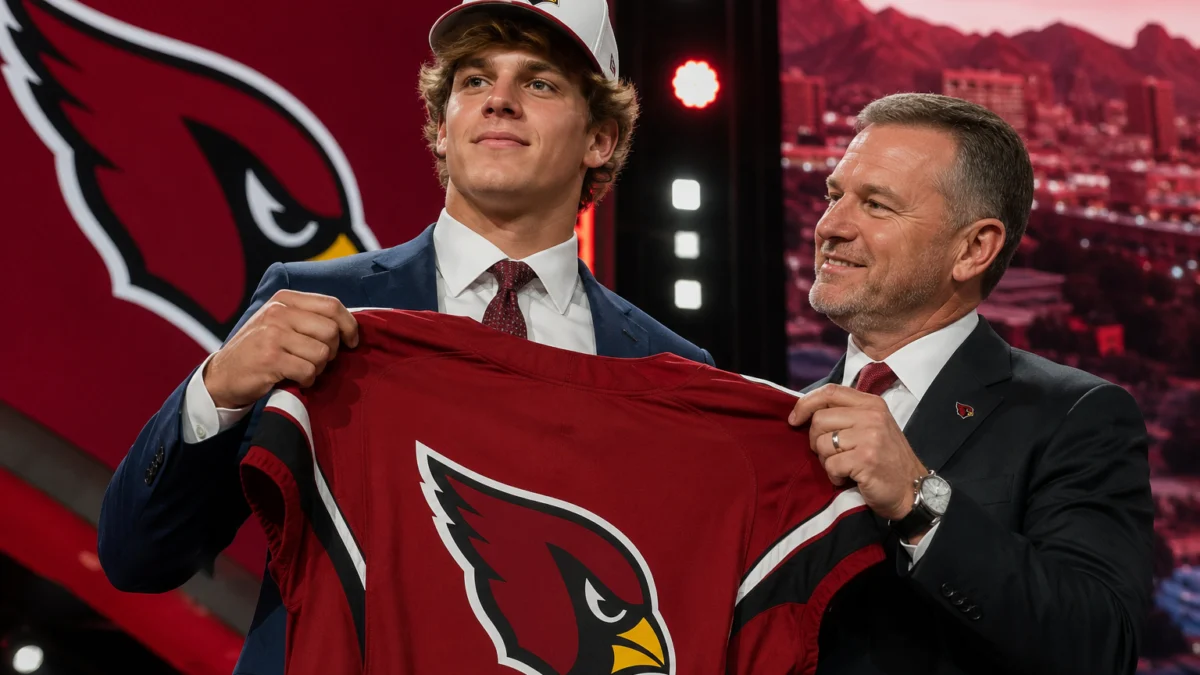
NFL training camps are opening across the league, and that means one thing for draft watchers: it’s time to reset the board. A newly updated one-round mock draft for the 2027 NFL Draft has Texas quarterback Arch Manning going first overall to the Arizona Cardinals, with Ohio State receiver Jeremiah Smith landing at No. 2 to the Miami Dolphins.
This is speculation, not reporting. The 2027 draft is still more than a year away, and nothing here reflects any team’s actual draft plans, front-office intentions, or player declarations. It’s a projection based on current college football rosters and team needs heading into the 2026 season — the kind of exercise outlets run every summer before a single snap of the new college season has been played.
Quarterbacks Are Scarce at the Top — For Now
Only two quarterbacks show up in the first round of this projection: Manning at No. 1 and Oregon’s Dante Moore at No. 3 to the New York Jets, who have churned through starting quarterbacks for years. The mock’s authors are explicit that this could change fast. With a deep group of passers expected to develop over the season, a two-quarterback first round could easily turn into four or five by the time the actual draft approaches next spring.
Manning, who has been one of the most closely watched prospects in college football since his high school days, is projected to “continue to develop as a passer and cement his spot on top” by draft time, according to the mock. The Cardinals, cast as a team in need of a foundational answer at the position, are floated as a logical landing spot.
Where the Skill Players Land
Jeremiah Smith going second to Miami is framed around fixing a weapons shortage around a young quarterback room, rather than around any coaching change. Texas receiver Cam Coleman goes fifth to the Raiders, while Indiana’s Charlie Becker and Oklahoma’s Wyatt Young round out a receiver class that’s well represented in the first round.
On the ground, Ole Miss running back Kewan Lacy is the only back projected in round one, landing with the Cincinnati Bengals at No. 17. The mock’s authors call him the clear top back in the class, a notable distinction in a draft cycle that’s otherwise light on premium running back prospects this early.
Trenches and Defense Dominate the Middle Rounds
Nine of the first 17 picks in this projection go to defensive players, with edge rushers and defensive backs getting the bulk of the early love. South Carolina’s Dylan Stewart goes fourth to Cleveland as a potential Myles Garrett heir, and Texas edge Colin Simmons lands seventh with Tennessee. Notre Dame supplies two of the first ten picks — cornerback Leonard Moore to Carolina at No. 8 and safety Tae Johnson to the Giants at No. 10 — continuing the program’s recent run of producing early-round defensive backs.
Along the offensive line, Texas tackle Trevor Goosby and Ohio State guard Austin Siereveld headline a group the mock’s authors describe as thinner than usual at tackle, with several prospects who could rise sharply once the season starts.
2027 Mock Draft — Round 1 Snapshot
| Pick | Team | Player | Position | School |
|---|---|---|---|---|
| 1 | Arizona Cardinals | Arch Manning | QB | Texas |
| 2 | Miami Dolphins | Jeremiah Smith | WR | Ohio State |
| 3 | New York Jets | Dante Moore | QB | Oregon |
| 4 | Cleveland Browns | Dylan Stewart | EDGE | South Carolina |
| 5 | Las Vegas Raiders | Cam Coleman | WR | Texas |
| 17 | Cincinnati Bengals | Kewan Lacy | RB | Ole Miss |
| 28 | Kansas City Chiefs | Drew Mestemaker | QB | Oklahoma State |
| 32 | Cleveland Browns | Ryan Wingo | WR | Texas |
One notable wrinkle late in the round: the mock has Kansas City taking Oklahoma State’s Drew Mestemaker at No. 28 as developmental insurance behind Patrick Mahomes — described plainly as a projection that goes against convention for a team picking that late with a Super Bowl-caliber roster.
Why This Matters Now
Mock drafts released this far out say more about current roster construction and coaching tendencies than they do about actual draft outcomes. A full college football season, an entire NFL season, coaching changes, injuries, and early-declare decisions all sit between this projection and the real 2027 draft next spring. Historically, one-round mocks published at this stage of the calendar bear only partial resemblance to draft night — but they’re a useful early read on which programs are producing this year’s most talked-about prospects.